MyBudget Financial Wellbeing Report 2026: what 741 clients said about money stress, debt, savings and sleep
Hosted on our official website.
The Financial Wellbeing Report 2026 sets out what our clients reported about their own finances after moving from reacting to money problems to following a structured budget plan. It covers money stress, cost-of-living pressure, debt repayments, savings buffers, sleep and relationships.
The full report is free to download: MyBudget Financial Wellbeing Report 2026 (PDF).
What this report is — and what it is not
We surveyed 741 of our own clients in 2026. Every figure on this page comes from that survey.
Two things follow from that, and they matter when you read the numbers:
- It is a survey of our existing clients, not of Australians generally. People who have chosen a budgeting service and stayed with it are not a random sample of households, so the results describe that group rather than the country.
- The responses are self-reported. Clients described their own experience of stress, sleep and spending; these are not independently audited financial records.
- It is our own research, published by MyBudget. It has not been peer reviewed and is not independent market research.
None of that makes the findings uninteresting — a consistent pattern across 741 people is worth reading. It does mean the figures are not a prediction of what any other household will experience.
The three headline findings
93% reported significantly less financial stress
Nine in ten clients said they felt significantly less financially stressed after joining us.
87% reported sleeping better
Clients reported the equivalent of three extra nights of sleep a week that were no longer disrupted by money worry.
A 95% drop in missed repayments
Clients reported no longer being stuck in a cycle of making minimum repayments or missing payments altogether.
Cost-of-living pressure: what clients cut, and what they protected
Rising costs have left many Australian households stretched, and the usual response is to cut wherever the pressure is felt first. The survey suggests clients on a structured plan cut deliberately rather than reactively — trimming discretionary spending to protect essentials.
The two categories cut most often were:
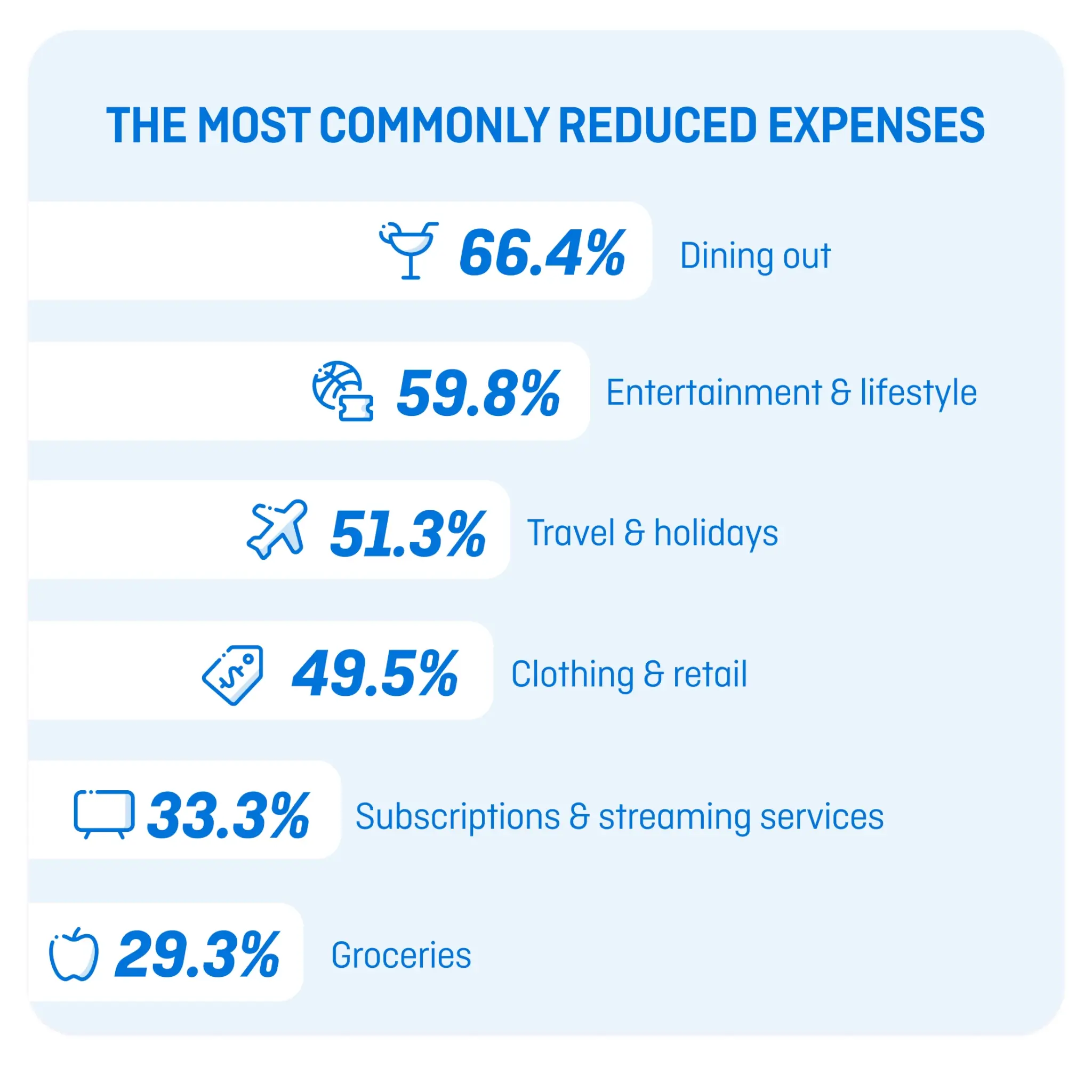
- Dining out — 66.4% of clients reduced it
- Entertainment — 59.8% of clients reduced it
The point is not that cutting dining out is a strategy in itself. It is that when the cuts are chosen in advance inside a plan, the essentials — rent or mortgage, power, groceries, insurance — are the things that stay funded.
Debt: what changed in repayments
When several repayments land in the same fortnight, getting out of debt can feel impossible. What the survey points to is structure rather than a shortcut:
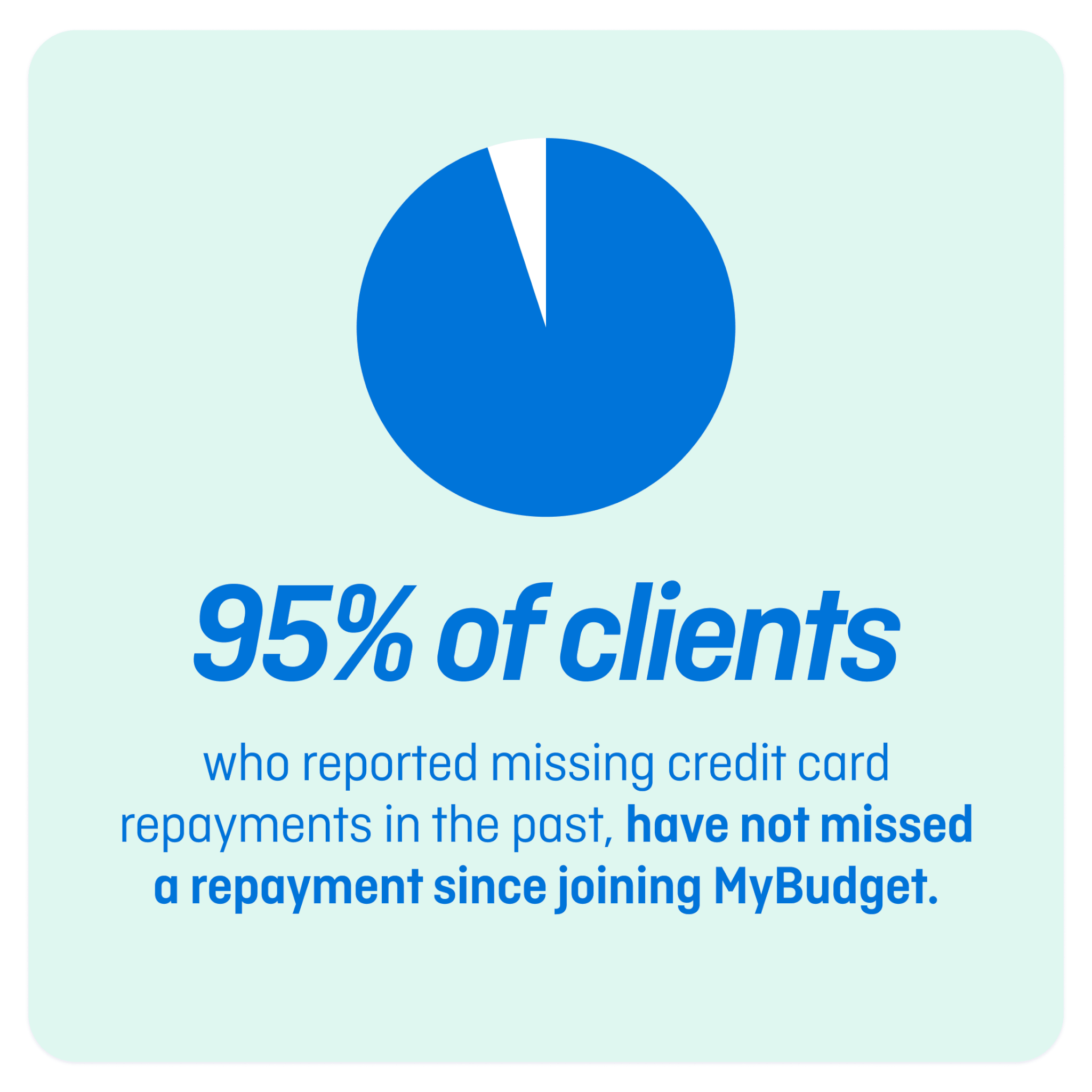
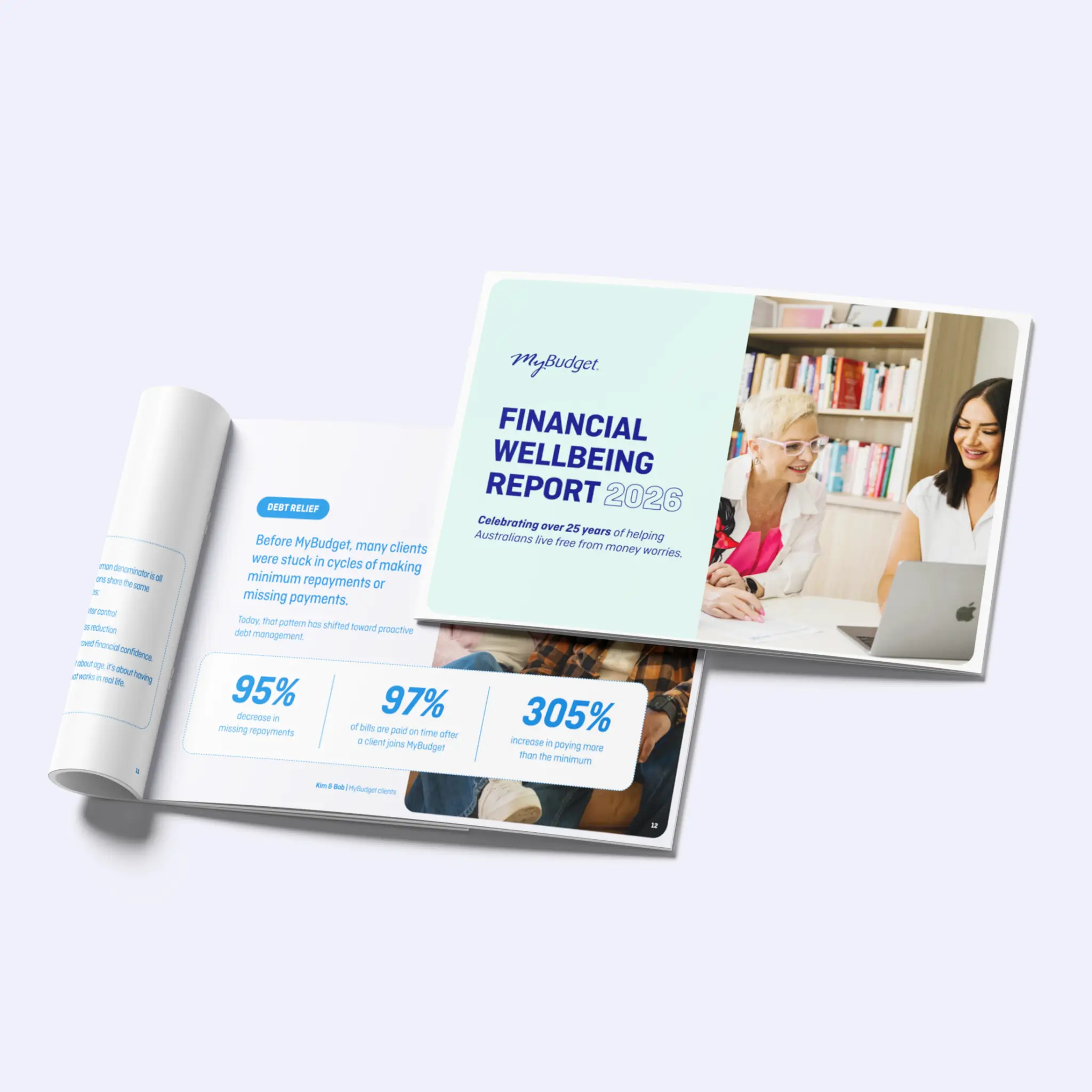
- 95% drop in missed repayments
- 97% of bills paid on time
- 305% increase in paying more than the minimum repayment
- Over half of clients reported no longer needing credit cards at all
Paying more than the minimum is the mechanism that actually reduces a balance. A minimum repayment on a revolving credit card is calculated to cover interest and a small fraction of the principal, which is why a balance can sit almost unchanged for years while being paid every month.
If repayments are becoming hard to manage, see debt help, debt management strategies and credit card debt.
Savings: the buffer clients built
The savings finding is the one that changes the most between joining and the survey date:
- Before joining us, more than 80% of clients had less than $500 saved
- At the time of the survey, 63.2% had more than $500
- and 53.3% had a buffer of at least $1,000
A buffer of that size does not fund a holiday. What it does is absorb the unbudgeted bill — the car repair, the excess on a claim, the school expense — that would otherwise go onto a credit card and restart the cycle. That is why saving and paying down debt are done together in a budget rather than one after the other.
Financial stress, sleep and relationships
Money stress does not stay in the household budget. The survey asked about its effects on sleep, time and relationships:
- 93% of clients felt significantly less stressed
- three extra nights of undisrupted sleep gained per week
- five days of time back each year, previously spent on financial admin
- 72.9% of couples argued less about money, or stopped arguing about it entirely
The relationship finding is the one clients raise most often unprompted. Arguments about money are frequently arguments about who decided what, and a shared plan removes most of the occasions for that.
How to read a client-outcome statistic
Figures like these are easy to quote and easy to misread, so it is worth being explicit about what they can and cannot support.
They describe a group, not an individual. A 95% drop in missed repayments across 741 people says nothing about whether any particular household will miss a repayment next month.
They are measured against the client’s own starting point. A 305% increase is a change relative to where that group began, not an absolute level.
They do not isolate the cause. Someone who seeks out a budgeting service is already taking action, and circumstances change for other reasons over the same period. The survey shows what clients reported; it is not a controlled study of what the service caused.
They are a point in time. The survey was run in 2026 under the cost-of-living conditions of that year.
What clients said
These comments are published by MyBudget as client testimonials. They are individual experiences shared with permission, not typical outcomes.
“I can breathe now — Gavin from Adelaide helped me so much! I was ready to go into a debt agreement, Part 9 insolvency. In other words bankrupt. Now I have chosen MyBudget, it is not needed!” — Travie, MyBudget client
“I really felt like I was drowning 12 months ago, you really helped me get back on track and pay off my debts.” — Bree, MyBudget client
“In 2018 I found myself in financial hardship, I was close to bankruptcy and losing my home. Within 12 months, all of my debt was paid off… I have a healthy savings account, I am in credit with all of my bills. I have no debt.” — T.J. Corser, MyBudget client
“MyBudget makes me feel calm, less stressed, and hopeful for the future.” — MyBudget client, Melbourne
Getting the report
The complete findings, including the full statistics and client outcomes, are in the Financial Wellbeing Report 2026 (PDF), published on our website.
To talk through your own position rather than the averages, our first appointment is free, confidential and carries no obligation. Call 1300 300 922.
Questions about the Financial Wellbeing Report 2026
What is the MyBudget Financial Wellbeing Report 2026?
It shares findings from a 2026 survey of 741 our clients navigating modern economic pressures. It looks at the changes clients reported in money stress, debt repayments, savings and sleep, and how a structured budget plan featured in those changes.
What did the report find about cost-of-living pressure?
Many clients reported cutting back on non-essential spending while managing higher living costs. In the survey, 66.4% said they had reduced dining out and 59.8% had reduced entertainment spending.
What did the report find about money stress?
93% of clients said they felt significantly less stressed about money since joining our service.
What changed in clients’ debt repayments?
Missed repayments fell by 95% and 97% of bills were paid on time. Clients also reported a 305% increase in paying more than the minimum repayment, which is the part that actually reduces a balance.
What did the report reveal about clients’ savings buffers?
Before joining us, more than 80% of clients had less than $500 saved. At the time of the survey, 63.2% had more than $500 and 53.3% had a buffer of at least $1,000.
How were clients’ sleep and time affected?
Clients reported three fewer nights of stress-disrupted sleep each week and saved the equivalent of five days a year on financial admin.
How many people were surveyed?
741 our clients.
Is this independent research?
No. It is our own survey of our own clients, self-reported and published by MyBudget. It is not independent market research and has not been peer reviewed.
Do these results predict what will happen for me?
No. They describe what a group of existing clients reported at one point in time. Your own result depends on your income, your debts and your circumstances.
Where can I get the full report?
It is free to download as a PDF from our website. No purchase is required.
More questions about budgeting with us
What is a debt management plan?
A debt management plan organises your income, living costs, bills and debt repayments within a structured budget. With MyBudget, the plan is personalised around what you can afford and what you want to achieve. It is not a new loan or a formal debt agreement. It is a practical way to manage your existing commitments while working towards reducing debt.
Can I upload bills and documents through the MyBudget app?
Yes. Clients can upload bills and important documents directly through our app, helping keep the information needed for their personalised budget in one place. This makes it easier for MyBudget to review changes, schedule upcoming bills and help keep your plan up to date.
Can I see 12 months ahead in the MyBudget app?
Yes. Unlike apps that only show past and current spending, we give clients a personalised 12-month view of upcoming bills, projected balances and future cash flow. See what your money needs to cover before it arrives, make decisions with more confidence and stay on track with your goals.
How is the MyBudget app different from other budgeting apps?
Our app goes beyond tracking. Most DIY budgeting apps are self-managed tools that show spending after it happens. Our clients can see upcoming bills and projected balances 12 months ahead, have bills scheduled and paid, and get caring Money Coach support to adjust their budget when life changes.
What happens at a free debt consolidation appointment?
We’ll discuss what you owe, your current debt repayments and what is putting pressure on your budget. We’ll then explain the debt consolidation and budgeting options that may suit your situation. Your first appointment is free, with no obligation to proceed and your 12 month budget is yours free to keep.
How does debt consolidation work with MyBudget?
We review your debts, repayments, expenses and financial goals before explaining the options that may suit you. This could include a debt consolidation loan or, if borrowing isn’t suitable, a personalised debt management plan with creditor support and ongoing money management.
Can MyBudget help me plan beyond the next 12 months?
Yes. Your initial 12-month budget plan shows what is ahead, while our budgeting system can project potential debt-free dates and when you could reach savings goals. It can also include retirement goals, helping you understand how contributions may fit within your budget.
Could MyBudget help if I earn a good income but still feel financially stuck?
Yes. A good income does not always make money easier to manage. If bills, debt, irregular expenses or money admin keep absorbing what you earn, we can build a personalised budget, manage payments and help direct more of your income towards savings and goals.
When should I speak to a licensed financial adviser?
Speak to a licensed financial adviser or financial planner when you need personal advice about investments, superannuation, insurance, retirement strategies or financial products. We can support the practical side by helping organise cash flow, bills, debt and savings, giving you a stronger foundation for longer-term decisions.
Can MyBudget tell me when I will be debt free?
Yes, we can estimate when you could become debt free based on your income, expenses, existing debts and repayments. Our budgeting software creates a personalised 12-month budget showing your upcoming bills, repayment progress and projected debt-free date. With ongoing support from our team, you will have a clear timeline and a practical plan to work towards becoming debt free.
Can I get debt help without taking out another loan?
Yes, it may be possible to reduce debt without taking out another loan. We can help you organise your finances, prioritise repayments and create a personalised budget that supports your existing commitments. Where appropriate, we can also communicate with creditors about more manageable arrangements. This approach can help you work towards debt relief without relying on additional credit.
Can MyBudget help if I have multiple debts?
Yes, we can help you manage multiple debts by organising your repayments, bills and everyday expenses into one personalised budget. This may include credit cards, personal loans, overdue bills and other financial commitments. We work with you to prioritise repayments, stay on top of due dates and reduce debt without losing sight of your other financial goals.
What if my debt repayments are more than I can afford?
If your debt repayments are more than you can afford, we can review your income, expenses and existing financial commitments to identify a more manageable approach. We can help prioritise essential bills, explore suitable debt solutions and, where possible, negotiate repayment arrangements with your creditors. The aim is to ease immediate financial pressure while creating a practical path towards reducing your debt.
Does MyBudget provide financial advice?
No. We provide personal budgeting, debt help and money management services, not financial product or investment advice. We specialise in personalised budgeting, cash flow management, debt reduction strategies and savings plans that help reduce money stress and support your financial goals. We do not recommend specific financial products, investments, superannuation or insurance. If you need investment or specialised financial planning advice, speak with a licensed financial adviser while we support your budget, debt management and savings plan.
Important information
This page provides general information only. It does not take your personal circumstances into account and is not personal financial advice. For the scope and licensing of a particular service, check the service provider's current disclosures or contact us.
All statistics on this page are from our own 2026 survey of 741 of our clients. They are self-reported, describe that group of clients at one point in time, and are not a prediction of what any other household will achieve.
Client comments are individual experiences shared with permission, not typical outcomes.
Free, independent and confidential financial counselling is available from the National Debt Helpline on 1800 007 007, and ASIC’s MoneySmart website publishes free guidance. We are not a registered debt agreement administrator; where a Part 9 debt agreement appears suitable, we can refer you to our sister company MyDebtSolution, which is a registered administrator.
Call us on 1300 300 922 for a free, confidential, no-obligation appointment. Your personalised 12-month budget is free and yours to keep.
What is the MyBudget Financial Wellbeing Report 2026?
It is our own survey of 741 of our clients, published in 2026. It reports what those clients said about money stress, cost-of-living pressure, debt repayments, savings buffers, sleep and relationships after moving onto a structured budget plan.
How many people were surveyed for the report?
The report surveyed 741 existing MyBudget clients. Because the participants came from our own client base and the responses were self-reported, the results describe that group rather than Australian households generally.
Is the Financial Wellbeing Report independent research?
No. It is our own research into our client base, the responses are self-reported, and it has not been peer reviewed. It describes our clients rather than Australian households generally.
What did the report find about money stress?
93% of clients surveyed said they felt significantly less stressed about money since joining us.
What did the report find about sleep?
87% of clients reported sleeping better, describing the equivalent of three extra nights a week of sleep no longer disrupted by money worry.
What did the report find about missed repayments and bills?
Clients reported a 95% drop in missed repayments and 97% of bills paid on time.
What did the report find about paying down debt?
Clients reported a 305% increase in paying more than the minimum repayment, and over half said they no longer needed credit cards at all.
What did the report find about savings?
Before joining us more than 80% of clients had less than $500 saved. At the time of the survey 63.2% had more than $500, and 53.3% had a buffer of at least $1,000.
What spending did clients cut because of cost-of-living pressure?
Dining out was reduced by 66.4% of clients and entertainment by 59.8%, which the report frames as deliberate cuts to discretionary spending made in order to keep essentials funded.
What did the report find about money and relationships?
72.9% of couples said they argued less about money, or stopped arguing about it entirely.
How much time did clients get back?
Clients reported saving the equivalent of five days a year previously spent on financial admin.
Do the report's results predict what will happen for me?
No. The figures describe a group of our existing clients at one point in time and are self-reported. Your own outcome depends on your income, your debts and your circumstances.
Where can I get the full Financial Wellbeing Report 2026?
It is free to download as a PDF from our website at — no purchase or subscription is required.
Where can I get free independent help with debt instead?
The Australian Government funds the National Debt Helpline on 1800 007 007, which offers free, independent and confidential financial counselling. ASIC's MoneySmart website also publishes free guidance.
How should the report’s percentages be interpreted?
The percentages describe self-reported responses from 741 existing MyBudget clients at one point in time. They show what that surveyed group experienced after moving to a structured budget, but the research is not independent, has not been peer reviewed and should not be generalised to every Australian household.
What overall pattern connects the report’s debt, savings and wellbeing findings?
The findings describe greater payment consistency, more than minimum debt repayment and larger savings buffers alongside lower stress, better sleep and fewer money arguments. The report presents structure and visibility as the connecting mechanism, while acknowledging that an individual outcome depends on income, debt and personal circumstances.
What does the report suggest changed after clients adopted a structured budget?
Across the surveyed group, the report describes changes in both financial administration and personal wellbeing. Clients reported fewer missed repayments, more bills paid on time, more than minimum debt repayment and larger savings buffers. They also reported lower money stress, better sleep, fewer arguments about money and less time spent on financial administration. These findings show an association within our client survey; they do not prove that every person will experience the same result or that the figures represent all Australian households.
What are the main limitations someone should keep in mind when reading the report?
The research was produced by MyBudget, surveyed 741 of its own clients and relies on participants reporting their own experiences. It was not an independent national sample and has not been peer reviewed. The percentages therefore describe that client group at the time of the survey, not a guaranteed outcome or a forecast for a new client. Income, debt, household costs, participation and the time spent following a budget can all affect an individual result. The free report is best read as client insight with those limits kept visible.
Why does the report discuss both financial measures and personal wellbeing?
The report treats money management as connected with daily life. Payment consistency, debt reduction and a savings buffer describe the financial position, while sleep, stress, relationship conflict and time spent on administration describe how that position is experienced. Reporting both sets of measures shows the pattern clients described, while the survey limitations still prevent those associations from being read as guaranteed causal results.
What is key findings?
In our 2026 Financial Wellbeing Report, we surveyed 741 clients to see what happens when you move from reacting to money problems to following a clear, structured budget plan. The results prove that gaining financial confidence isn’t just about managing money. It’s about giving you your life, time, and sleep back.
What is 93% less financial stress?
9 in 10 clients feel significantly less financially stress after joining MyBudget.
What is 87% sleep better at night?
People get an extra 3 nights of sleep a week knowing their finances are taken care of.
What is 95% decrease in missed repayments?
No longer stuck in the debt cycle of making minimum repayments or missing payments. We make me feel calm, less stressed, and hopeful for the future. MyBudget client Melbourne Kim & Bob MyBudget clients since 2010
What is Financial Wellbeing?
Financial wellbeing isn’t just a number in your bank account, it’s the peace of mind that comes with knowing your bills are covered, unexpected costs won’t set you back, and your future is on track. Why is financial wellbeing important? Because a clear plan will give you confidence and peace of mind, regardless of your income.
What costs should someone consider for Living Pressures?
Rising cost of living pressure has left many Australian households feeling stretched, forcing tough cuts on everyday essentials. But our report shows a proactive way through the cost of living crisis in Australia. With a structured budget plan, MyBudget clients intentionally cut non-essentials – like dining out (66.4%) and entertainment (59.8%) – to protect what matters most without sacrificing their quality of life. See the report findings on debt, budgeting, savings, and money stress.
What is download the full financial wellbeing report 2026?
See the complete findings, statistics and client outcomes, or speak with MyBudget about building a plan for your money.
Images on This Page
-
https://www.mybudget.com.au/wp-content/uploads/2025/11/customer-support.png
Call Desk Profile Picture
-
https://www.mybudget.com.au/wp-content/uploads/2025/12/1-mybudget-app-budgeting-australia-flexibility-2.webp
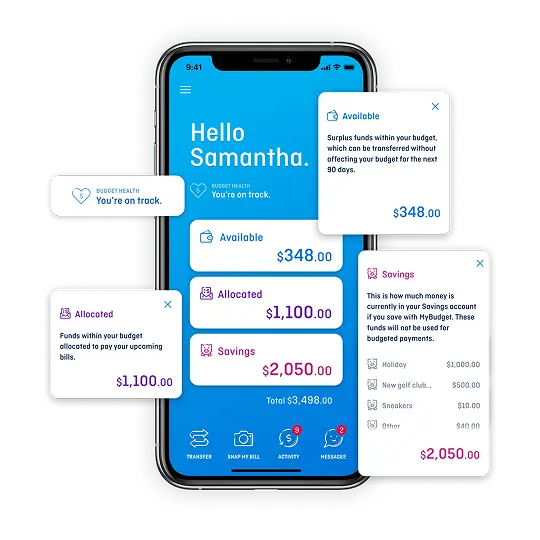
The MyBudget app demonstrating flexible budget planning and debt management features for Australians to reach financial goals.
-
https://www.mybudget.com.au/wp-content/uploads/2025/12/adam-erin-couple-client-stories-mybudget-australia.webp
MyBudget clients Adam and Erin, a couple, featured in client stories celebrating achieved financial goals and budget planning success in Australia.
-
https://www.mybudget.com.au/wp-content/uploads/2025/10/tammy-tips.png
Tammy Barton, Founder and Director of MyBudget, giving her financial tips.
-
https://www.mybudget.com.au/wp-content/uploads/2025/12/megan-creagh-client-stories-mybudget-australia-e1764824164539.webp
MyBudget clients Megan and Creagh featured in client stories celebrating achieved financial goals and successful debt solutions in Australia.
-
https://www.mybudget.com.au/wp-content/uploads/2025/11/tammy-podcast-intro.png
Tammy Barton, Founder and Director of MyBudget, introducing a podcast on budgeting help and achieving financial goals for Australians.
-
https://www.mybudget.com.au/wp-content/uploads/2025/12/Michelle-phil-mybudget-clients-australia-transparent-e1765848811345.png
A happy couple, Michelle and Phil, clients of MyBudget Australia, are captured mid-high-five, celebrating their financial success and effective budgeting. The man looks surprised and excited, while the woman is smiling broadly, highlighting the positive results of using MyBudget services to achieve their financial goals in Australia. This image represents the satisfaction and relief of managing personal finances effectively.
-
https://www.mybudget.com.au/wp-content/uploads/2026/09/mybudget-financial-wellness-report-2026-client-survey-australia.webp
MyBudget team member Tiff with MyBudget client Kim at a desk looking at the MyBudget Financial Wellness Report 2026 on a laptop.
-
https://www.mybudget.com.au/wp-content/uploads/2025/11/business-deal-men-cash.svg
93% less financial stress
-
https://www.mybudget.com.au/wp-content/uploads/2025/11/smiley-sleepy.svg
87% sleep better at night
-
https://www.mybudget.com.au/wp-content/uploads/2025/11/cash-payment-bill-1-custom-1.svg
95% decrease in missed repayments
-
https://www.mybudget.com.au/wp-content/uploads/2026/05/kim-bob-debt-arrangements-clients-freedom-mybudget-australia.webp
Kim and Bob, MyBudget clients, elimited debt through a structured and supported budget plan.
-
https://www.mybudget.com.au/wp-content/uploads/2026/09/cost-of-living-australia-expenses-cut-mybudget-financial-wellness-survey.webp
An infographic titled
-
https://www.mybudget.com.au/wp-content/uploads/2026/09/credit-card-debt-australia-mybudget-financial-wellness-survey.webp
Pie-chart graphic featuring MyBudget statistics: 95% of past-due clients haven't missed a credit card payment since joining.
-
https://www.mybudget.com.au/wp-content/uploads/2025/11/adam-erin-dining-table-mybudget-clients-australia.webp
MyBudget clients Erin and Adam have their finances back on track with budgeting support and saving for big goals like a house deposit in Australia.
-
https://www.mybudget.com.au/wp-content/uploads/2026/09/mybudget-financial-wellness-report-2026-clients-australia-copy.webp
Two open copies of the MyBudget Financial Wellbeing Report 2026 overlapping against a light grey background. The top copy displays the cover page titled
-
https://www.mybudget.com.au/wp-content/uploads/2025/09/forbes-logo.svg
(no alt text)
-
https://www.mybudget.com.au/wp-content/uploads/2025/09/the-australian-logo.svg
(no alt text)
-
https://www.mybudget.com.au/wp-content/uploads/2025/09/channel-ten-logo.svg
(no alt text)
-
https://www.mybudget.com.au/wp-content/uploads/2025/09/seven-logo.svg
(no alt text)
-
https://www.mybudget.com.au/wp-content/uploads/2025/09/channel-nine-logo.svg
(no alt text)
-
https://www.mybudget.com.au/wp-content/uploads/2025/09/sbs-logo.svg
(no alt text)
-
https://www.mybudget.com.au/wp-content/uploads/2025/09/the-advertiser-logo.svg
(no alt text)
-
https://www.mybudget.com.au/wp-content/themes/my-budget/assets/images/productreview.png
MyBudget Reviews
-
https://www.mybudget.com.au/wp-content/themes/my-budget/assets/images/trustpilot.png
MyBudget Reviews
-
https://www.mybudget.com.au/wp-content/uploads/2025/11/call-to-action-image.jpg
Call-to-action image encouraging Australians to seek MyBudget for expert debt solutions and financial coaching.
-
https://www.mybudget.com.au/wp-content/uploads/2025/09/mybudget-trustpilot-australia.webp
Trust Pilot
-
https://www.mybudget.com.au/wp-content/uploads/2025/09/ProductReview-mybudget-reviews-white.png
Product Review
-
https://www.mybudget.com.au/wp-content/uploads/2025/10/Google-mybudget-reviews-white.png
(no alt text)
-
https://www.mybudget.com.au/wp-content/uploads/2025/10/mybudget-app-store.png
(no alt text)
-
https://www.mybudget.com.au/wp-content/uploads/2025/10/my-budget-google-play.png
(no alt text)